Two Days at Maliandao, Beijing's Tea City
马连道 · Two days in the biggest tea market in northern China
At Juju & Tea, we dream of sourcing our teas directly from China, straight from the people who grow and make them. So while I was in China this time, I spent two wonderful days at Maliandao, Beijing's tea city, getting as close to the tea trade as I could. I went to learn from people with a lifetime of tea knowledge, and to start building the friendships and connections we'll need.
It was amazing, and I feel so blessed to have been there!
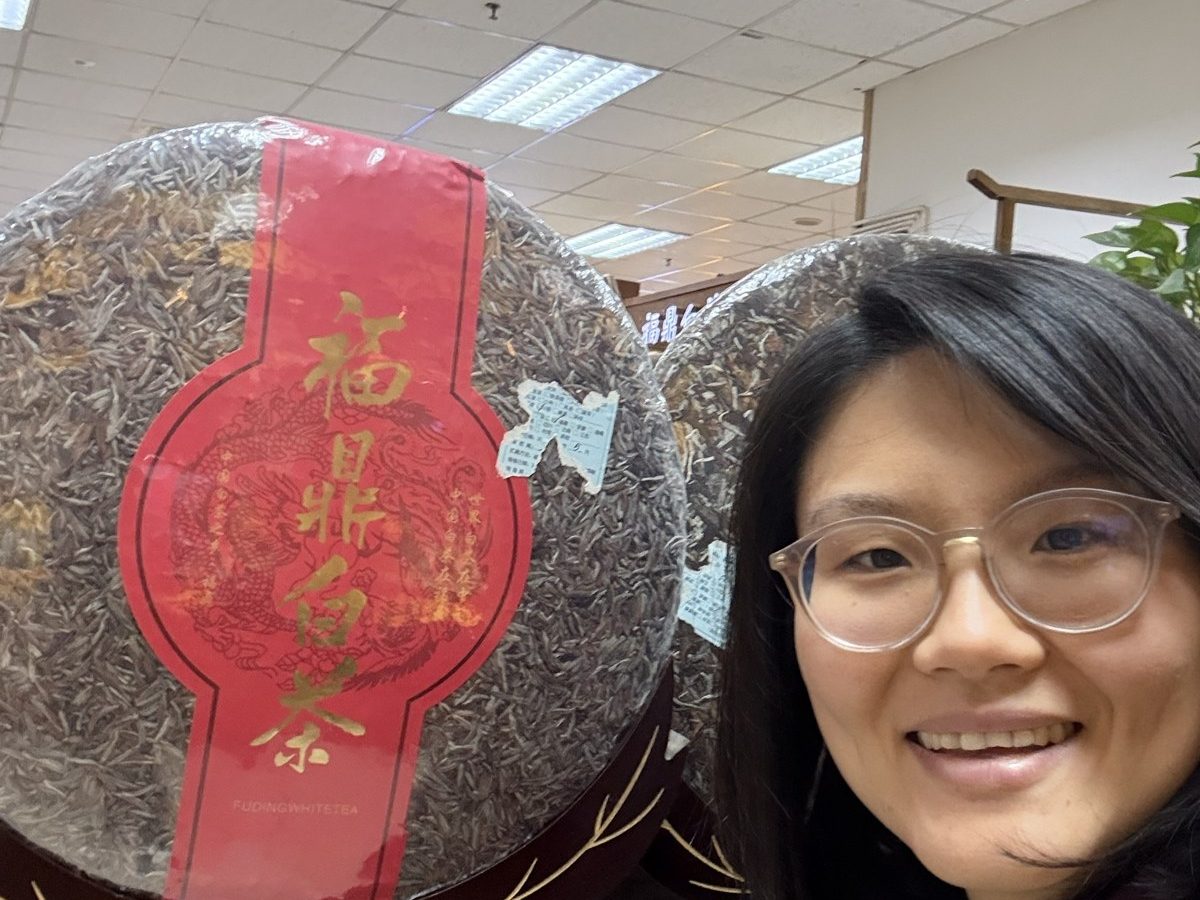
The biggest tea market in northern China
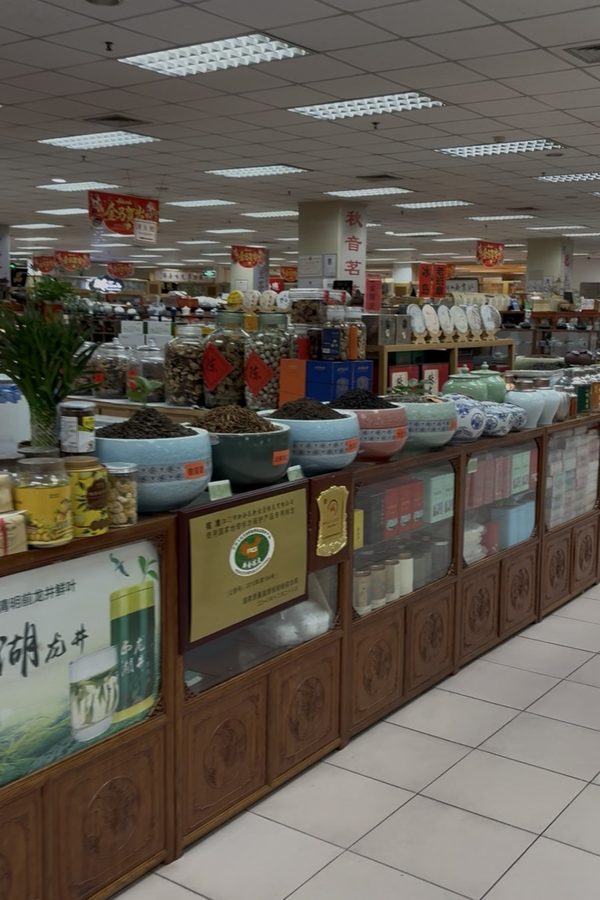
China's tea grows in the south, in provinces like Yunnan, Zhejiang, Fujian and Guangdong. But the north drinks an enormous amount of it, and Beijing, as the capital, has drawn the country's best teas for centuries. Maliandao is where the two meet.
It's a street about 1.5 km long near Beijing West Railway Station, lined with well over a thousand tea shops and around ten multi-storey tea malls. A state tea factory opened here in 1956, merchants gathered through the 1990s, and it grew into the hub where tea bound for northern China is traded and sent on its way. To think that so many tea people gather in this one place is just amazing!
Walking in
The moment you walk into a shop, it smells like heaven! Tea cakes are stacked to the ceiling, there's tea everywhere you look, and the owner is already putting the kettle on. Everyone is so friendly, and so happy to sit you down, brew for you and chat. In one shop we stayed for well over three hours, just talking about growing tea and enjoying tea.
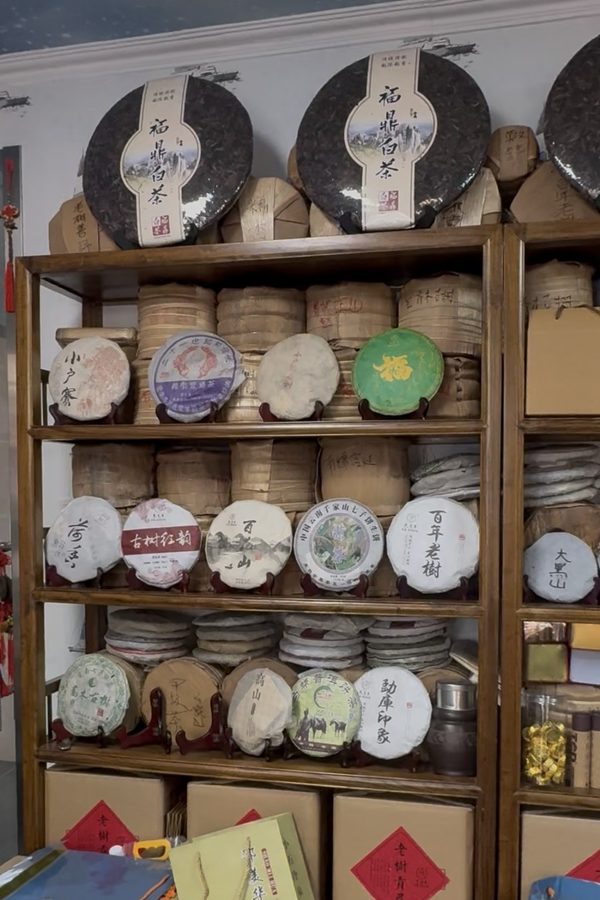
Most shops specialise: oolong, green tea, pu'er, white tea etc. Many are the northern branch of a tea factory in the south, the shop where that factory sells its own tea in Beijing, so you're talking to people directly connected to where the tea is grown and made. Others are all-rounders, traders with a broad, carefully chosen range, which is lovely in its own way because you can taste across styles in one sitting with someone who has a deep understanding across them all.
Whatever you like, you'll find it here, from pinnacle, top-shelf collector's teas to gentle, easy daily drinkers. It's a tea lover's paradise!
At the tea table
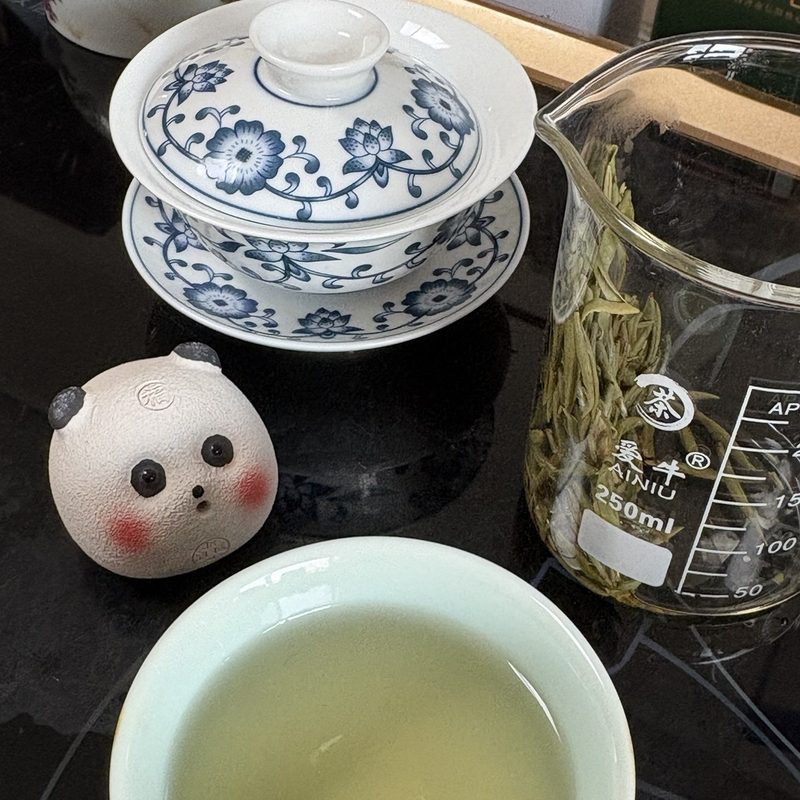
Every owner brews differently. Some prefer the ritual of gongfu style: tea weighed out precisely, brewed in a gaiwan and served with care. Others are wonderfully relaxed. For bud teas especially, they brew straight in a gongdao bei (a glass sharing pitcher), pour it into a second one and serve. No scales, just a handful of leaves and what feels right.
I loved seeing both! Precise or easygoing, everyone at the table was relaxed and happy, simply enjoying the moment. There's no right way to drink tea. You find what you like, slow down, and enjoy it.
Sister Wang and the art of waiting
The person I'll remember most is Sister Wang, who runs a beautiful tea house specialising in white tea.
White tea ages gracefully for years, and for most of us, whether a cake is 10 or 11 years old makes very little difference. But Sister Wang is a true tea sommelier, and she wants every cake to reach her customers at its very best. So she tastes her cakes every year, to see whether they are still getting better or have reached their peak, and only then decides whether to bring them out of storage.
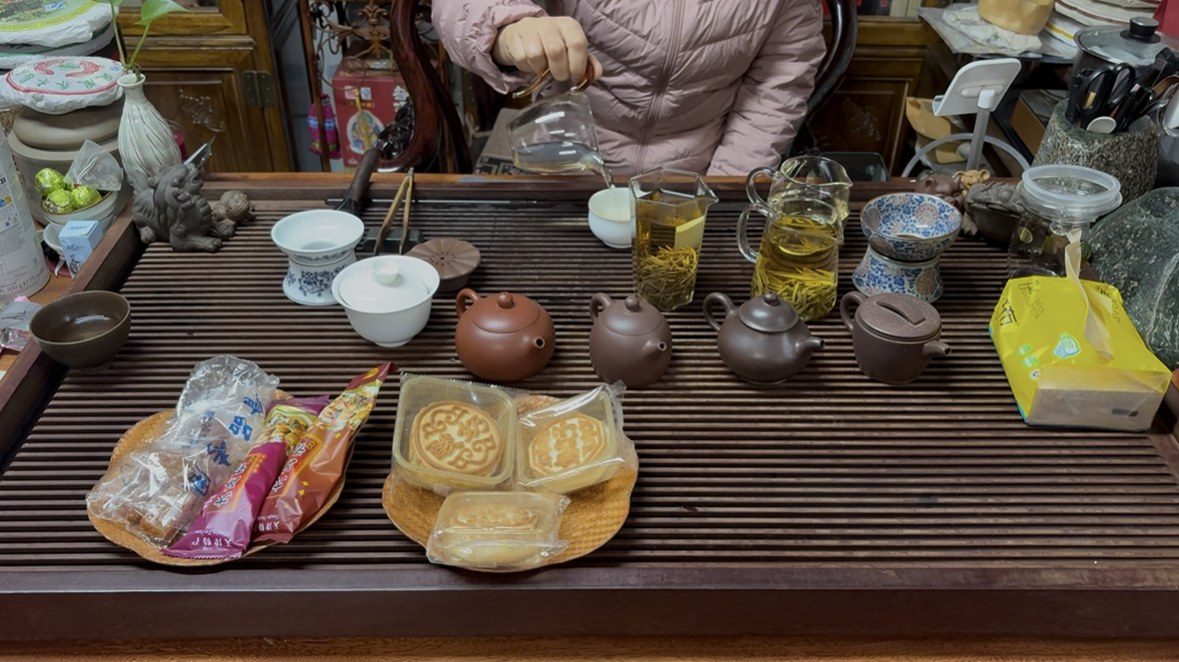
It struck me that this is exactly how master blenders work with whisky! You can have a very good idea of how a tea will age, but the only way to know it's at its best is to taste it. Good things take time, and there's something lovely in that. You wait, you taste, and you enjoy every step along the way.
I could not resist a little shopping!
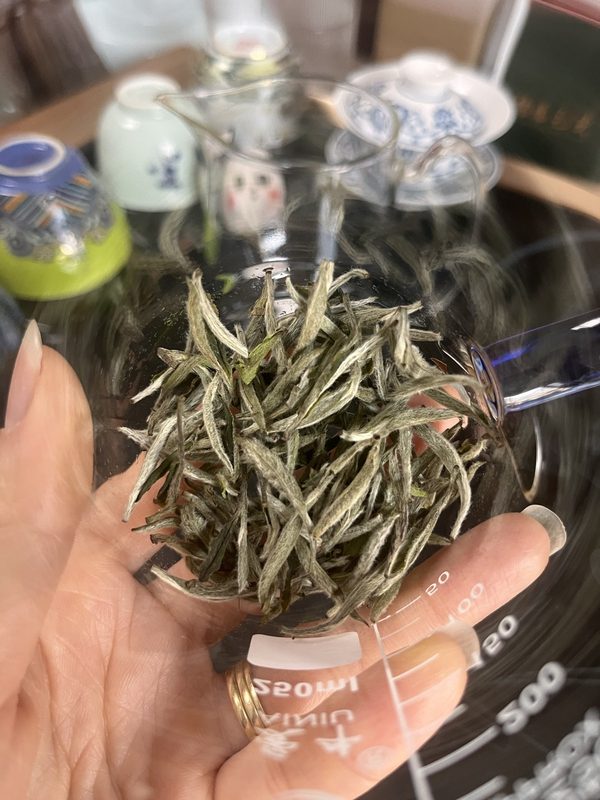
Over two days we tasted so many lovely teas: black teas, raw and ripe pu'er, a beautiful Bai Mu Dan, and several Silver Needles. I was so happy to find one Fuding Silver Needle I really loved. It was picked this spring in 2026, with very uniform buds, and it's super floral, rich and delicate all at once. That one came home for our personal collection.
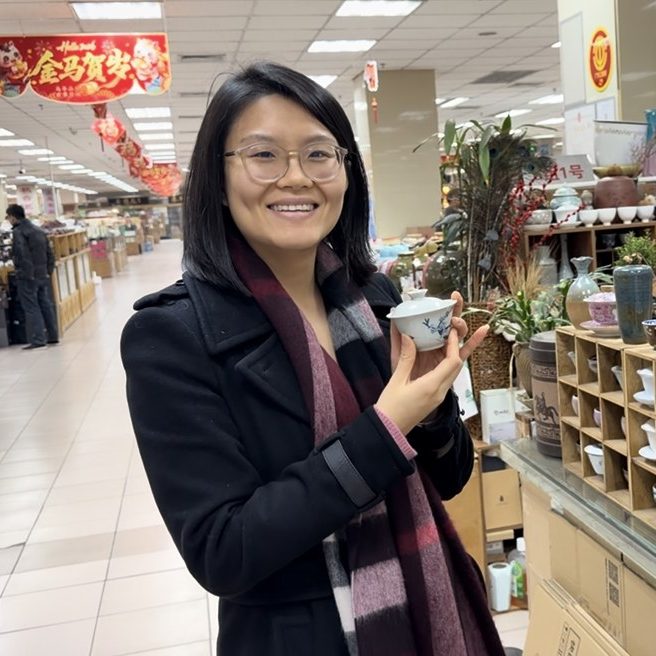
Maliandao is also full of teaware, with ceramics and gaiwans everywhere. I couldn't resist a blue and white gaiwan and a little panda tea pet.
Just the beginning
Two packed days, and I explored only a tiny fraction of the market. The conversations go so deep that hours fly by. Thank you to my cousin, Yao Yi, who works in Beijing and came along with me.
I'll be back very soon, this time with Martin, my husband and Juju & Tea co-founder, to work out the logistics of sourcing directly. We are really excited for what is to come next!